Showing posts with label fitness. Show all posts

6 Exercises for Disabled or Frail Seniors


Seniors who are facing a serious disability or are frail from an illness or accident need exercise too. Nursing homes have found that arm and leg exercises performed with residents during the day helps them sleep better at night and stimulates the appetite of those who may have trouble eating.
Even if an elderly person seems to be totally without functional capacity, it's scientifically and medically known that when engaged in a strength-training program on a regular basis, spontaneous activity is improved. Light aerobic exercises and mobilizing joints may also help with osteoarthritis issues.
Psychological benefits are also prevalent when seniors engage in regular exercises. It has been shown to relieve depression symptoms, cognitive abilities and provides a sense of self-confidence. Cardio is also improved as the senior gets more oxygen because of the light workouts.
Below are some of the main exercises for seniors who may be disabled or frail or suffering from an illness where much exercise is prohibitive:
Stretching - Even seniors confined in a wheelchair can perform stretching exercises. Stretching improves range-of-motion, joint and muscle health and strength and flexibility. Stretching movements should be customized for seniors as to time and type of exercising involved.
Strength - Resistance training is the best way to improve strength in disabled or frail seniors. It helps build muscles and endurance and can increase mobility of the seniors and prevent serious falls by improving balance.
Wheelchair sports - It's especially helpful for seniors who are confined to wheelchairs to become social and active. Adding some competition to the workouts can be adapted to a wheelchair by practicing basketball, weightlifting, track and field and more.
Chair aerobics - This is performed while the senior is in a sitting position and involves rapid repetitive movements. These movements will raise the heart rate, help burn calories and result in more mobility.
Swimming - Many health centers and hospital facilities offer pool therapy. A water aerobics class is an excellent choice for those who may be immobilized or have little leg function.
Cardio - Seniors can get an excellent cardio workout by "air-punching" - simply punching at the air either with or without weights. Playing along with an Xbox or Nintendo's Wii makes it even more fun.
The benefits of exercises to disabled or frail seniors can't be stressed enough. Exercise boosts the mind as well as the body and can greatly improve the physical state and mental state of all seniors. Be sure to tailor the exercise to the fitness level of the senior and speak to a health care provider for the go-ahead.


Article Source: http://EzineArticles.com

5 Ways to Rev Up an Aging Metabolism


You don't have to take an aging metabolism sitting down. By getting up off the couch and moving a bit each day, you can keep your metabolism purring and feel and look younger.
An aging metabolism ranks right up there with saggy skin, gray hair and more defined wrinkles as you age. It slows you down and helps you lose muscle mass - as much as 50% -- by the time you hit seventy years of age.
You'll also burn less calories as your metabolism slows, bringing on the weight gain and other problems associated with too much fat, such as diabetes and heart problems. Here are 5 great ways to boost your metabolism and fight the aging process:
Eat smaller amounts of food, several times per day - Rather than practicing the "three meals per day" routine, try eating small amounts of food every couple or three hours. This keeps your metabolism working at burning calories and has the added benefit of keeping you filled up so you don't binge.
Always eat breakfast - Your metabolism is still in the "resting" mode when you wake up, but when you eat breakfast, your metabolism will awaken and burn the calories that would otherwise be stored as fat. Also, you won't be in danger of over-eating later in the day because you're too hungry.
Add some aerobic exercises into your regimen - Keeping your metabolism humming along means that you must add some aerobic activity into your daily routine. A few minutes of swimming, brisk walking, biking, dancing or hiking can boost your metabolism and help prevent weight gain.
Restful sleep can fight fatigue - When you don't get enough slumber or it isn't a relaxing type of sleep, you may be so tired the next day that you can't or don't want to exercise. You may also tend to eat more - and less healthy - food, causing weight gain and a sluggish metabolism.
Add strength training to your exercise regimen - Aerobic exercises are must to rev up an aging metabolism - and so is strength training. Working with weights, resistance bands or other equipment designed to build muscle is important to help fight muscle loss that occurs as you age and to keep your metabolism working properly.
Even if you have medical problems or a disability which keeps you from vigorous exercising or strength training, you can find ways to move as much as possible. Engage in any opportunity to move your arms, legs and torso when you can. Getting up to change the television channel or practicing chair exercises are much preferable to doing nothing.
Medications can also slow down your metabolism. If you suspect that you're taking a prescription medication which is making you lethargic and you're gaining unwanted pounds, speak to your health care provider about an alternative medication or natural remedy.
John Rivers, an Independent Team Beachbody Coach, and his wife Beth enjoy helping individuals reach their health and fitness goals. Their unique support style through social media is a very integral part of their accountability model. Find more info at HomeWorkoutsWork.com or sign up to Join their "private" Facebook group. "Friend" John today to start reaching "YOUR" goals.


Article Source: http://EzineArticles.com

Workouts for Women Who Want Great Legs


Every guy loves a woman who has good legs, and every woman wants to have good legs that I from my own perspective. In-order to get those sexy legs a lot of hard-work is needed because no good thing ever comes easy, so ladies if you want those super sexy article this article will provide a lot of tips for your benefits. Here are a few leg workouts for women that are guaranteed to workout (pun intended).
Plyometric squat
This is an easy workout for beginners, what you have to do is stand on your feet, squat down with your knees being approximately 90 degrees. Now softly jump up and down while you are still squatting. It is advisable to use the strength of your legs to explosively jump up. With your knees bent make sure you land softly. To make sure this exercise works do 3 sets of 8 reps everyday for maximum results.
Plie
Stand straight with your feet apart vaguely wider than your shoulders, also make sure your toes are pointed out. Stretch your arms in a straightward position in-front of you, then lower yourself into the squat position. Go up and down and repeat, also make sure that go as low as you can on the squat, and don't let your knees go further than your toes. This particular exercise is hard to do at first but you know how the saying goes, no pain, no gain.
Sun salutation
This is somehow a yoga exercise and it focuses mostly on building the muscles in your leg, if done right and on a regular basis the results will bring you excellent results. You are going to need a mat to do this one. Keep your feet together while standing on the mat and both your arms by your sides, make sure that you dispense your whole body weight fairly on the soles of both your feet. With your knees bent place your hands on the floor strictly shoulder-width apart, now jump with both feet backwards and at the same time lift your hips. Do 5 sets of 8 reps everyday.
These 3 leg workouts for women are meant to bring out the muscles in your legs, but only if done right. If you want to turn those heads while you are walking in the street then I suggest that you try any if not all of these exercises.
For more Fitness and Workouts Tips at http://www.workouts.org


Article Source: http://EzineArticles.com/

Tips for Riding Your Bike in the Snow


How to Ride Safely in Snowy, Winter Weather
While it may seem like riders hang up their bikes for the winter season, the truth is that thousands of cyclists continue to ride all year-round regardless of the weather. With the introduction of new, improved cycling equipment, more durable riding attire and an increased interest and awareness of the ability to ride in the winter weather and specifically snow, more and more riders are keeping their bikes going throughout the season. While it is possible to ride a bike in the snow, there are some safety tips to keep in mind to help riders stay on their bikes and riding safely even on snow-covered terrain.
Use the Right Bike
When riding in the winter, it is important to be aware of the different materials that are used on snowy roads and trails and how they can affect the performance and condition of your bike. Many state road workers will use grit, salt, and sand to help treat roads for wintery conditions and, just as these materials can be damaging to a car, they can also be very damaging to a bike's gears and suspension. When riding in the winter, it would not be suggested to use an expensive bike only to have it destroyed by the elements - instead use an older, used bike that can be designated specifically for winter riding. If you are using a "road" bike instead of a hybrid or mountain bike, consider using wider tires with better grip than the standard tires or slicks you are using during seasonal riding.
Stay Warm
Even in the coldest weather, athletes and outdoorsy people will tell you it is still possible to sweat from doing outdoor activities. They will also tell you that the key to staying warm is layering your clothing. When riding in winter weather, make sure to add the right layers to your attire - these layers should include water wicking base layer, insulating fleece, and a water-proof outer layer. Fewer layers are generally needed for legs since they are continually pedaling the bike. Also, do not forget to keep hands and feet warm as well by wearing insulated layers that will keep the heat in and the cold out. You may also want to consider some type of leg balm for added warmth while riding.
Know the Road Conditions
Generally, when state road workers treat major roads, the conditions are generally the same for riders as they are during other seasons since the salt, sand, and grit are added. Bike trails are often plowed as well, but it is still important to consider the condition of any trail or road before getting on the bike. Black ice and slippery spots can be very hazardous to riders, so it is important to take caution when going out in wintery conditions. Also, it is important to be aware of cars around you - drivers are much less aware of bikers in the cold of winter so make sure you see them and they can see you for safety. One final thing to remember is that roads are cleared less often in the winter, which probably means more debris, such as stones and glass, will be on the road causing potential hazards for your riding.
If you are going to be riding your bike in the snow, you may need some Skratch Labs Apples & Cinnamon to keep you warm! Did you know that CyclingTraining.WS offers free USPS Priority Shipping on all Skratch Labs orders? For more information or to place an order,


Article Source: http://EzineArticles.com/

All About Electrical Muscle Stimulation


The benefits or harms of Electrical Muscle Stimulators (EMS) have been under the scanner for years now and contradictory reports have been published in this regard. While some call it the elixir for supernatural strength, others term it as unnatural and harmful. What these stimulators do is that they replicate the production of electric current inside body through a device which is attached to the electrodes in contact with our skin. This electric current, stimulates the muscles in the applied area to contract and thereby strengthening them. However, it is no substitute for exercising and ought to be used for injury recovery purposes. Some of the common benefits and harms that come hand in hand with the use of Electrical Muscle Stimulators are as follows:
Benefits
Aids Athletes: High profile coaches have been known to use these stimulators for training the players at various levels. The stimulation helps them to enhance their peak performances in around a fortnight's time and also ensures faster recovery from injuries. Not only is it used for rehabilitation but is increasingly being used in training of runners, football players, body builders and other strenuous athletes.
Faster Recovery: Even a small injury can easily jeopardize the career of a sportsperson and Electrical Muscle Stimulation aids the injured players to recover faster and retain a fitter physique. The results achieved with EMS's are such that the player is able to return to the field with a strengthened body despite being in rehabilitation. Damage to bones, ligaments, tendon etc. are greatly soothed by these.
Harms
Faux Machines: Since it is a latest technological advancement, the market is thronging with machines which use the basic EMS formula for weight loss and calorie burning. Although calories are burnt through their use yet it isn't as systematic as a traditional exercise routine would be. One shouldn't be tempted to use EMS as weight reducing tactics while sitting on a sofa and relaxing. It has to be complemented with other forms of physical training.
Others: If not used under proper guidance, the stimulator can also lead to muscle tear if it has been turned too high for one's endurance. The electric current and adhesive on electrodes can also result in skin allergies and irritation. Since the stimulator works on electric current generation, it may interfere with other implanted electrical medical devices. For such users should always consult their doctors before resorting to use EMS. If any of the so far mentioned cons occur, one should seek professional help at earnest.


Article Source: http://EzineArticles.com/

Healthy Diet And Fitness Tips For Women


Women have a major influence on the overall health of all the members in a family. This is true whether the woman works inside or outside the home. In most households, women are the key decision makers when it comes to planning meals. They are usually the ones preparing food at home and planning grocery shopping lists. In general, women also tend to be more health conscious and care for other family members. Mothers can help get their children off to a healthy start by teaching healthy food and fitness habits at a very young age. Providing health and fitness tips to women helps the entire family.
A preventive strategy can help delay or reduce long term medical expenses associated with chronic illnesses like diabetes and heart disease. Most homes have a television, computer, or video game system which promotes a sedentary lifestyle. A healthy diet, regular exercise, and weight management are crucial for heart disease prevention. Getting regular exercise has become an organized activity even for children. A busy lifestyle also means that we need to plan and schedule time for daily exercise whether it is walking, yoga, jogging, or weight training at the gym. Yes, weight training does not always mean big muscles; this is a common concern among women. Weight training helps tone the body, strengthens bones and boosts metabolism. Free fitness tips and instructional videos on weight training and yoga are available online to help educate the public. Online fitness trackers can calculate the calories you burn with different physical activities, a helpful tool if you are on a weight loss program.
Women can set an example for the entire family by eating healthy and exercising regularly. Fad diets that focus on single foods or nutrients are not healthy and result in short term weight loss. Most people regain the weight when they eventually revert to old eating habits. A healthy diet for women is well-balanced and rich in nutrients. It not only supports weight management but also includes nutrients for unique needs like pregnancy, breast feeding, bone health, and anemia (related to menstrual issues). Nutrition and diet are among the most popularly searched for topics on the internet. Use common sense and good judgment, check your online sources of information. Follow diet tips for weight loss offered by qualified professionals like registered dietitians and doctors. Beware of miraculous weight loss potions, pills and powders; remember that it takes time to gain weight and even more to lose it.
Seetha N (M.S. Computer Science, B.S. Dietetics, B.E. Computer Engineering) is a Registered Dietitian Nutritionist. Born and raised in India, she offers effective Indian diet tips.


Article Source: http://EzineArticles.com/8683668

Essential Home Gym Equipments


It might not to be too appropriate to make a list of essential home gym equipments, but it is surely helpful to give a list of the essential features to watch out for when you step into a gym equipment store to purchase your home exercise equipment.
One important feature to consider is the versatility of the tools. It is advised that buyers try to find home fitness equipments that allows them work out their arms, legs, abs, and thighs. These mufti-utilization pieces allow users to work out on several gym equipments and on several parts of the body. This saves money and brings more fun.
Good home gym equipment should have some steel or aluminum frame. This is essential in order to give strength to the home gym equipment and to also durability as you do not want to think of replacing your equipments few months after the initial purchase. You might want to look out for some guarantee on the equipment when making the purchase.
The following is a list of items needed to make your collection of home exercise equipments classy and effective. They come in no particular order and are only a form of recommendation.
Cardiovascular Training Gear - these tools support weight loss, muscle toning and overall body conditioning. Electric treadmill, rowing machine, and a jump rope are some examples of equipments that fall under this category.
Muscle Strengthening Apparatus - the name says it all. These equipments help build the muscles and help keep the body fit for daily tasks. Some of the equipments here include Dumbbells and resistance bands.

Equipments to aid Muscle Flexibility - Pilates machine, stretch machine, and slant boards are examples of machines one can get under this category. They help reduce the risk of sustaining injuries and allow you use other gym equipments more easily.
Balance Apparatus - These types of equipments include disc pillows, balance dome, and wobble boards. They help improve one's balance and posture.
Those are the essentials features you need to watch out for when making your purchase of your home gym equipments. The listed equipments are just some of the many home exercise equipments you can purchase to get yourself armed with great fitness tools. Remember before making any purchase, make sure the equipments are of good quality, test it, and inspect it, prioritize your purchase, and try to consider others that might be interested in using your facility, after all, there is love in sharing.
We know what it takes to get in shape and lose weight and we realize that not everyone has the time or the ambition to go to the gym every day. We want you to get the same workouts you would in the gym and realize those same benefits but around your schedule and in your own home. Visit us today at http://www.yourhomeexerciseequipments.com
Article Source: http://EzineArticles.com/

The Best Fitness Tracker


Fitness is important, but it is more important to track your fitness, especially when you are working with set goals. Tracking makes it possible for you to know whether you are making the right progress or whether you need to make improvements to your workouts to make it easier to reach to the fitness goals that you have set. Fitness bands are amazing trackers that can come in handy for anyone. However, the Garmin Vivofit band can be considered to be the best fitness tracker of all. The band is simply designed for that perfect and comfortable fit in that it can be worn all day and still remain comfortable for the wrist. The band is water resistant to withstand sweat and it can be worn even for the toughest workouts possible.

The Main Features

The features of any product are what make it what it is and worth the value that it is. The same is the truth for this fitness band. It has amazing features that make it stand out from the rest of the fitness bands that are available in the market.

The move bar: This is an interesting feature which keeps you in the know of just how active you have been throughout the day. On sensing that you have not been moving enough, a red bar appears on the band. You will see the bar in case you have been inactive for an entire hour. It is part of the programming on this band that makes it the best fitness tracker.

The battery: Most fitness bands in the market need to be charged every day. The Garmin, however has a long life battery that can go for a whole year without needing any charging. Some users might need to charge the band every month but this is still a long enough time compared to the daily charging requirements of other bands. You get the chance to concentrate more on your fitness than the band which is really nice.

Monitoring function: Besides monitoring your workouts every day, this band also has a monitoring function that can help you see how much sleep you get every night. Sleep is very important when keeping fit since a lack in enough sleep can lead to breakdown and exhaustion. This can make it harder to keep up with any fitness goals that you have. With this function, you will make improvements as soon as you see a need to, which will be good for your goals and health in general.

Stats trackers: They are also found in other fitness bands and they help in charting calories burned every single day and the metabolic burning rate. It is definitely one of the most important features of any fitness tracker. The charts help you know how close you are getting to the goals you have set.

Other features that make the band the best fitness tracker include being lightweight, Bluetooth connectivity and the pedometer function which can tell you how many steps you take every day and therefore how active you are.
To reach for your fitness goals faster, you will need to find the best fitness tracker with all the features that make the tracking easier. Click on the link given below to find out more:

http://www.thereviewz.com/reviews/the-best-fitness-tracker-garmin-vivofit-fitness-band-review/

Chest Exercises for Weight Training

Chest Exercises for Weight Training


chestChest exercises are weight training exercises that are designed to strengthen the muscles located in the area of your chest. 

The muscles located inside your chest are called the pectoral muscles (pectoralis major and minor) and chest exercises are usually divided into two groups: upper chest exercises or lower chest exercises. 

chest exerciseYour chest muscles are solicited whenever you are engaged in a pushing motion with your arms and will usually solicit the help from neighbouring muscles, specifically the trice and the deltoid muscles. Because of the sheer number of pushing motions involved in day to day activities (pushing the shopping cart, closing the car door, etc.) and because the chest area is one of the most visible part of a person's anatomy chest exercises form an extremely popular type of weight training exercises. 

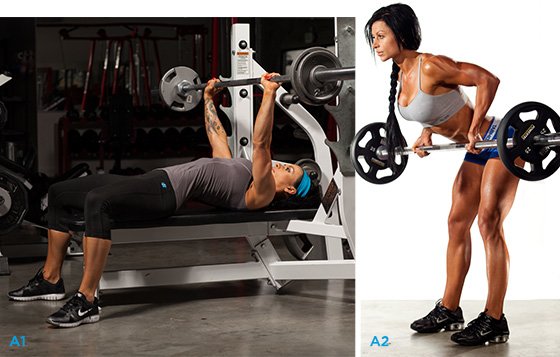
Chest exercises are predominantly performed using a workout bench and a barbell but many can be performed using dumbbells, strength equipment or even without using any equipment at all (such as the pushup). The most notable chest exercise is the bench press in which you lie on your back on a workout bench and push a barbell up and down towards your chest. Also well known is the strength exercise known as the pec-deck fly in which you use a gym-type equipment and pull your arms towards each other.
zwaw


Dumbbell Chest Exercises

Dumbbell Chest Exercises

Barbell Chest Exercises

Barbell Chest Exercises

Band Chest Exercises

Band Chest Exercises

Bowflex Chest Exercises

Bowflex Chest Exercises
Ball Chest Exercises
Strength Chest ExercisesStrength Chest ExercisesDQDFDSFDSFSDF

6 exercises for building muscle without equipment

Here's how to build muscle and get fit in the comfort of your own home, no special gear required.

Want to save time and money? Workout at home! (All illustrations: shna/Shutterstock)
You may think you need an expensive gym membership or fancy equipment to build muscle and workout effectively, but results are possible just by using your own body weight. With that in mind, here are six exercises that will have you building muscle and looking great in no time — sans equipment:
1. Running or walking
Build muscle running
No expensive treadmill or elliptical needed, just your own two legs and a good pair of running shoes. “If you focus 80 percent of your energy on cardio, you will see your body transform,” says Ashley Marriott, a Los Angeles-based fitness trainer and coauthor with Dr. Marc Paulsen of “Dump your Trainer.”
“Look at runners and cyclists; they’re not doing spot training, they do cardio, cardio, cardio," says Marriot. "Most of the people you see in mags that have amazing abs, they’re runners, swimmers, athletes; they are not doing a bunch of crunches. How they got so lean? Their diet is clean, and they get a tremendous amount of calorie expenditure in their cardio.”
 
Marriot is a huge advocate of one trick: when you do cardio work, pull your navel into your core. Even as you walk or run, don’t just focus on the cardio, think about your abs and pull them in. You’ll see increased strength from that.
To do: Try walking at a quick clip or running a slow jog for 15-30 minutes to start. Add in increments of 5-10 minutes weekly. 
2. Squats
Build muscle squats
Squats are one of the best exercises you can do. It’s easy to progress to more difficult versions over time; and in the meantime, perfect your form for best results.
To do: Stand with your feet shoulder-width apart and put your arms out straight in front of you or behind your head. Begin by pushing your hips and butt back and bending at the knees. Look straight ahead and keep your chest up and back flat. Your back should remain in this neutral position throughout the movement. Squat down as low as you can and then pop back up to the starting position by driving through your heels. Weight should remain on your heels throughout the exercise. (Pictured above is a variation, the jump squat.)
3. Push-ups
Build muscle push-ups
Push-ups work your chest, shoulders, triceps and core for a complete muscle-building exercise. They’re a major deal, so don’t neglect them.
To do: Place your hands on the ground slightly wider than shoulder-width apart and lower yourself until your chest almost touches the floor. Squeeze your glutes together and tense your abs as you lower and raise your body. Keep your elbows close to your sides to protect your shoulders.
If you can’t do a push-up, it’s easy to modify doing the same movement with your knees bent slightly and remaining on the floor, or work up to push-ups by starting on an incline. Use the same technique above against a wall. Place your hands just beyond shoulder-width on a wall, tighten core and press up and lower back to the floor.
4. Crunches
Build muscle crunches
They help with core strength and may tone your midsection, but don’t obsess. They should be one small part of an overall plan to develop core strength, which is important for overall body strength and muscle building.  “Women who want a six pack may be unrealistic sometimes, and I have to tell them, if you’re at a healthy body mass index, and feel good, maybe your genetic makeup is not going to give you a six pack.” And that’s OK.
To do: Lie on a matt or carpeted surface for comfort. Bend knees so feet are flat on the floor. Cross arms in front of chest. Lift your shoulders towards the ceiling using your abdominal muscles and pause at the peak of the movement. Don’t lift your entire back off the floor, as this can cause back strain. Exhale and contract abs as you go up. Inhale and ease slowly back down until shoulders are flat on the floor. Don’t just plop backward; control the movement. Go for two to three sets of 10 to start.
5. Walking lunges
Build muscle lunges
Lunges are great for building thigh muscles says Marriot.
To do: From a standing position, feet hip-width apart, take a giant step forward with knee bent at 90 degrees. Keep knees over ankles and shoulders over hips. Take another step and repeat until fatigued. Go for three sets of 10 with each leg. Also look to cardio work, like hiking or walking up and down steps in your house to combine leg work with cardio. 
6. Tricep dips
Build muscle tricep dip
“Again, the back of the arm is a place where women carry weight genetically, and that may be the last place that some women lose weight, so watch calorie intake and get more cardio,” says Marriott.
To do: You needn’t use a dip machine or weights but instead, use your own body weight. Sitting at the edge of a chair, place your hands over the edge of the seat, keeping knuckles pointing forward. With legs out in front bent at a 90-degree position and feet pointing ahead, shoulders are down and elbows are close to your side, slowly bend elbows into 90-degree angle, lowering your butt towards the floor. Pause and return to sitting, keeping pressure on the heel of your hands. Try two sets of 10 or until triceps fatigue.
And remember: Before starting any exercise routine, check with your doctor

Functional Training: Top 5 Mistakes


"Functional Training" has been a hot buzz phrase in the fitness industry for more than the past decade. While there are many fitness enthusiasts and professionals effectively executing this type of training, there are a still a handful of mistakes being made by beginners and uninformed professionals.
The first order of business is to clarify the definition of "functional training". Generally functional training focuses on developing better movement skills vs. training primary to improve cosmetic appearance. The best way to further define functional training is to answer the question "functional for what?' Training for swimming, running or horseback riding all require different training exercises to serve these different functions. There are, however, certain commonalities such as developing better core strength and stability that will improve performance across all functional activities.
Here are 5 functional training mistakes and how to correct them:
1. Unclear goal - Before designing your training program you should establish and define a clear set of goals you hope to achieve. The more specific your goals, the better you will be able to design your training to achieve them. If your goals are simply to lose some weight and feel good, examine your lifestyle and the activities you like most to further clarify your goals. For example, if you spend many hours sitting at your desk working on your computer, exercises to strengthen you postural muscles and open your shoulders will help you feel better.
2. Adding too much variety and complexity without mastering the basics - Sometimes the basics can seem boring and people want to spice things up. This can lead to a breakdown in sound body mechanics and technique that can lead to injury and sub optimized performance. Taking the time to train your core with simple exercises such as a prone plank will build a solid base that will allow you to perform more advanced exercises and progressions with better results in the long run.
3. Not enough focus on the actual functional activity itself - If you have a sport specific goal, make sure you are getting enough time practicing that specific activity. Every sport has specific demands unique to that sport that require practice. Your training in the gym should be geared to compliment your sport, not take priority over the actual sport itself.
4. Mimicking others - You often see people in the gym doing advanced or complex exercises that may not be suitable for you. Stick to your goals and only do what is appropriate for you given your current fitness level. Getting ahead of yourself trying to do what someone else can do will not get you as far and can lead to injury.
5. Avoiding "meat and potato" exercises - Some people ignore functional exercises such as squats and dead lifts believing that these exercises do not fit their definition of functional training. While some people may have limitations that prevent them from heavily loading these exercises or force them to modify range of motion, squats and dead lifts build a strong functional base for better ground based movements. The amount of emphasis on these exercises can vary depending on the functional objectives - swimmers would generally focus less on squats and dead lifts than runners for example. However, working to improve your body weight squat is one of the best functional exercises for anyone (even swimmers have to perform ground based movements such as walking to the pool and lifting things up and carrying them). Make it a point to improve your squat and everything else will get better.
Keep these 5 Mistakes in mind when you embark on your functional training quest.
If you're interested in learning more about proper body mechanics or functional training visit http://www.weckmethod.com for articles, videos, and additional resources.

11 Ways to Make Your Life More Active


Life can get hectic at times so it may be difficult to get a full blown workout in every single day but there are plenty of little ways you can stay active in everyday life. Even if you are not breaking a sweat, there are still great benefits to getting some extra movement in.
1. Workout at work
Working out at work can be a great way to help energize yourself throughout the work day. Even these micro-workouts can elevate the heart-rate a bit and serve as minor cardio. Besides the exercises we've detailed in that post there are many other ways you can get some exercise during your 8 hour day.
1. Take the stairs as often as you can
2. Instead of driving to lunch, take a walk with some coworkers and maybe even have some quality bonding time.
3. If you find yourself constantly using your phone to page your coworkers, try walking to their physical offices instead. Unless the matter is extremely time sensitive, then you should probably stick with using the phone.
4. Encourage social sporting outings after work and maybe even form a team. Or have sporting competitions between departments.
5. If your commute is short enough, you can even ride a bike to work. On that note,
2. Ride your bike
If you do not have a bicycle, it is well worth it to invest in one. Try to ride is everywhere whenever possible.
3. Let the remote collect dust
Even during your relaxation time, you can find a way to get a little more movement by getting off the couch and manually changing the channels. This also prevents soreness and dangerous conditions which may arise from sitting still for an extended period of time.
4. Clean the house
This piece of advice offers you two great benefits. First, you can easily work up a sweat cleaning up your house by intensely vacuuming or taking mopping to the extreme. The second benefit is that your house will be clean.
5. Find an active hobby
It doesn't have to be a sport, but sports are a great and fun way to get into shape and stay active. Other active hobbies include carpentry, gardening, wood chopping, biking and many more.
6. Find someone who is active and tag along with them (or make someone active)
Workout partners are the best.Being active is always more fun when you have someone to socialize with and you can hold each other accountable. You can also take your dogs for walks. Dogs are generally always up to be more active.
7. Stand up at work or just whenever possible
As stated before, sitting down can negatively impact health, so if possible, standing at work can help you feel better and more energized throughout the day. There has also been an increase in popularity recently for the desk treadmills. While the technology isn't quite there yet, standing at work can still help you be a little more active.
8. Dance
Whether it's at a club or just in your living room, dancing can be an awesome way to burn a few calories. If you have a significant other, take them out to swing dancing or salsa or any of the other festive dances out there. If you don't have a significant other, there is no shame in dancing alone. Everyone does it.
9. Go shopping
Not online shopping, that doesn't count. Walking around the mall at a brisk pace can also be a way to move around in a fun environment. Malls are especially great during hot days since they're air conditioned. Just make sure to keep your credit card at home so you don't get too tempted by all the goodies.
10. Park far away
When you're at the mall or anywhere else, try to park a good distance away in order to squeeze in a little more fitness time. Avoid parking a great distance away at night though. That may be harmful.
11. Exercise while doing other stuff
Multitasking is highly recommended if you're too ridiculously busy to work out all the time.
1. Do wall-sits while brushing your teeth
2. Work while sitting on an exercise ball. Trying to stabilize yourself will work out your core muscles.
3. Ride a stationary bike while reading
4. Ride a stationary bike while watching television
5. Ride a stationary bike while contemplating the true meaning of life
6. Do calf-lifts while standing in line
The possibilities are endless. There are always ways to make everything a little more active. You just have to get creative.
When do you do have time for a workout, visit our site at http://fitnessequipmentprofessionals.com. We sell used treadmills, ellipticals, exercise bikes, strength machines and much more from the top brands in fitness. We have a 50,000 sq ft warehouse located in Santa Ana (the heart of Orange County) and we deliver worldwide. Our gym equipment is up to 70% off MSRP so visit us today!

How To Condition Yourself To Run Faster


There is no question that reaching greater speed is one of the foremost goals which both newcomers and experienced veterans strive for in the sport of running. The thrill and urgency of competition remains at the back of our minds with each day as we train harder to outdo our counterparts finish time on the race track. Faster running speed is within the reach of all of us, however in order to attain this goal it is without question that a combination of regular training, hard work, persistence and deep focus is required.
Like the attention which a mechanic applies in preparing a high-performance vehicle prior to participation in a major racing event, we as runners must also prepare and fine tune our bodies in order to achieve the greatest performance. This preparation goes a long way in conditioning the muscles to a state which will help you exceed your capacity for running speed while preventing the injury and fatigue risks associated with running.
There are specific techniques you can use in training which are designed to prepare and challenge your body to remain functional, avoid fatigue and exceed your previous capacity for speed. By applying the knowledge and proven techniques explained in this article you will have the upper hand against your competitors who failed to recognize the importance of proper preparation to employ before a major running event. Let us take a look at how to achieve the proper running form in order to promote athletic success:
Proper running form relies on hitting the proper stride and body posture while balancing the amount of energy which is expended upon each step as you run. This trade of energy input and output can be attained by taking careful consideration into the motion of your body as you lengthen your stride while increasing your cadence. It is important that you remain focused upon this type of form and conserving as much energy as possible simultaneously, which is the basis of proper running form. Improper form results in over-striding and insufficient use of your body's energy resources which is sure to slow you down and cause fatigue quicker than you think. Here are more details about achieving proper form as a runner, focusing on the purpose of key body parts.
The position of your head largely dictates the rest of your form as you run, so be sure to keep it positioned parallel to the horizon in front of you. As you maintain your head's position, your neck and back will automatically fall into a naturally correct bodily alignment. When in this position you should feel as if your "running tall" with your back in an upright position which supports your form nicely. Keep your shoulders in a relaxed position while running, it is important that you ensure they are not tense or fall into a position which is near the height of your ears.
Your arms dictate a large part of your body's momentum when in motion. Make sure they are relaxed and move naturally forth and back as you run, falling just above your torso with each swing. Your legs are also powerful limbs which control your movement so make sure they maintain a flow which promotes a motion consistent and natural to the body. This is achieved through keeping your knees bent slightly with each step while landing on your heel to let the landing and pushing motion roll into the position of the toe. This type of running form will ensure that you are moving in a way which promotes the best chance of achieving top speed, endurance and agility.
When choosing a training schedule to condition your body for reaching faster speeds, it is important to pace yourself according to your athletic experience and limitations. This is a convenient aspect of the running sport which allows you to progress at a pace which is best for your physical ability, so feel free to plan accordingly. A recommended training schedule is the run exercise which entails a run of 9 minutes from your starting point to a chosen destination, then a shorter run of about 7 minutes back to the point you originally started from. Before you begin this exercise, start by warming up with a 2 minute jog or walk. You can also use this 2 minute technique after you complete the 9 to 7 minute run as a way to decrease your momentum and cool off.
Since running is mentally as well as physically challenging, it can help you to think of any major race or training preparation for a race as a smaller series of challenges rather than one big event. As a tip which may offer a means for you to approach your challenges in a different state of mind, try sectioning off specific milestones within the total destination of your running distance and time. This will help goals appear closer and you can focus on achieving them as a series of points within a whole.
With all the physical power that goes into running as you push your muscles to their limit, it is important to have a recovery plan at hand which will allow you to repair your muscles and continue to function at a rate which is competitive. After a hard run and fatigue has set in, artificial respiration is a great way to provide your muscles with the cooling they need in preparation for recovery. When they have cooled and stiffened, try applying pressure to your sore muscles. As you use this motion it will cause your muscle tissues to compress, resulting in circulatory movement which carries oxygen-rich blood from your legs up into the heart. Once this flow of healthy blood occurs, it creates a cycle of circulation needed to revive your oxygen-deprived muscles back into working order.
Motivation is key when faced with the challenge of conditioning your body and mind to run faster. In order to remain persistent and on pace to meet higher goals as an athlete, form a schedule and stick with it until you obtain results. Your goals of how many days a week you can train, how many reps of exercise your body can take and how far of a distance you can run should be realistic so observe yourself accordingly. Remember, to increase your speed requires dedicated training and gradual progress as you graduate from one level of athleticism to the next. However, running is a sport which accommodates the universal physical requirements of people from all shapes, sizes and backgrounds so finding a pace to eventually excel is not a difficult task.
Al Brown is a professional marathon runner and an expert in athletic conditioning. For more great information on running faster, visit http://tipstorunfaster.net.

FatWallet Coupons and Deals
Click Here to Learn More